
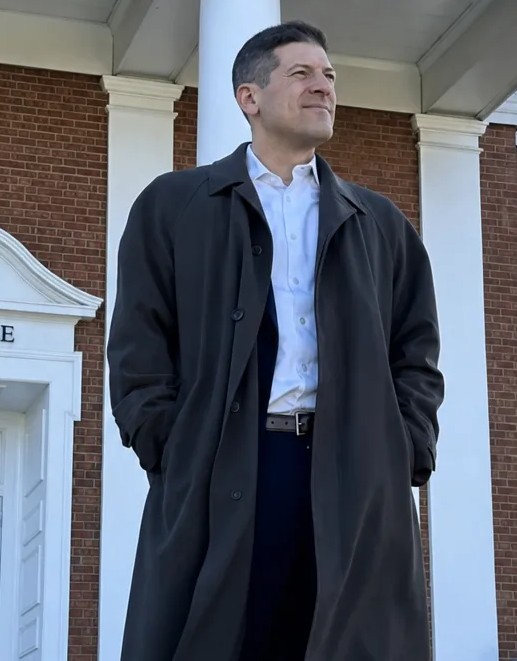
More than six months ago, I wrote about a highly qualified but largely unknown candidate who had given up a secure career to undertake what looked like a quixotic campaign.
David Solet had spent 24 years as a prosecutor, most recently as chief of the Middlesex District Attorney’s Cold Case Homicide Unit. He had been named the 2025 Middlesex County Prosecutor of the Year. Then he resigned to challenge his longtime boss, District Attorney Marian Ryan.
On paper, Solet had almost everything a district attorney should have: experience prosecuting murder, domestic violence, child exploitation, organized crime and public corruption; leadership of both the Cold Case Homicide Unit and the Cyber Protection Unit; service as chief legal counsel to the state Secretary of Public Safety; and the perspective of an Army Reserve JAG officer who has represented both military defendants and victims of sexual assault. He is an honors graduate of Princeton and Harvard Law School.
What he did not have was political visibility, a campaign organization, or anything approaching Ryan’s formidable financial resources. “David who?” was a not-unreasonable reaction.
Today, things have changed — and not just because the primary comes early this year….on September 1, a week before Labor Day.
Solet remains the underdog, but his campaign has grown into a serious county-wide challenge. He has visited all 54 Middlesex cities and towns. More than 25 law-enforcement and public-safety organizations (the people who work most closely with the D.A. to protect the public) have endorsed him. Former prosecutors, attorneys who previously opposed him in court, victims’ relatives and other people familiar with his work are now speaking publicly on his behalf.
Former Middlesex assistant D.A. and former Massachusetts Lawyer of the Year Lisa McGovern has praised Solet as “smart, hard-working, attentive, personable, and above all, ethical.” Relatives of murder victims praise something even beyond his professional credentials: a prosecutor who listened to them, treated them compassionately and persisted after their cases had gone cold.
Solet’s campaign has also become financially real, although the disparity remains daunting. According to state campaign finance records, Ryan started the year with a war chest of $637,000, has spent about $145,000 and, as of June 30, had $766,000 on hand. As of July 22nd, Solet has raised nearly a quarter of a million dollars, has spent about $140,000 getting his campaign launched and now has about $100,000 on hand. The filing dates of these reports are three weeks apart, but what’s clear is that there is a huge funding gap. Solet is not dispirited however. He says, “We’ll just be smarter at getting the message out,” meaning new technology and social media. Not having financial parity, he insists, is “not a reason not to run.”
I have also watched Solet grow as a candidate. The earnest but initially politically inexperienced challenger I met months ago now projects the confidence of someone whose ideas are being heard and whose campaign is attracting volunteers, contributors and supporters.
He has done it through the distinctly unglamorous work of retail politics: town committee meetings, playgrounds, carnivals, Pride celebrations, firehouse breakfasts, endless telephone calls and the humbling ritual of collecting signatures on his own nomination papers. In a down-ballot contest for an office many residents do not even realize is elected, that retail work matters.
So does the case he is making.
Solet argues that a district attorney must base decisions on the facts and the law, not on political convenience. He has criticized Ryan for failing to devote sufficient resources to cold cases and for not acting sooner to support an extension of the statute of limitations for aggravated rape. Ryan disputes his characterization of the cold-case unit and has characterized his criticism as what she described to the Harvard Crimson as “negative campaigning.” Voters should hear both candidates. (When I originally wrote about Solet, I contacted Ryan’s office multiple times, but never received a response. More recent requests for comment have gone unanswered.)
Solet’s larger point is persuasive: A district attorney sets the office’s priorities, and the D.A.’s responsibility does not end with enforcing the law as it exists. When a law prevents justice, the district attorney should use the office’s public authority to press the Legislature for change.
Given that role, some voters may even ask whether that means Solet should be running for the Legislature instead. It does not. A district attorney sees where criminal laws fail in actual cases. Although the officeholder does not vote on legislation, the head of such an important public agency has both the standing and the obligation to use what Theodore Roosevelt termed the bully pulpit.
Some progressives, now undecided, may be uneasy about Solet’s extensive police-union support. But Solet’s broader record does not fit the caricature of a reflexively punitive “law-and-order” candidate. He has served as a military defense lawyer as well as an advocate for sexual-assault victims. He participated in the Boston Bar Association working group that strongly opposed restoring the death penalty. He supports diversion and rehabilitation where they are appropriate while insisting that repeat violent offenders must be prosecuted effectively. Prosecutors must be able to work closely with police while independently evaluating their conduct and the evidence they produce.
A credible justice system must be capable of both discernment and resolve.
As I heard from her at one of her campaign events, Ryan emphasizes her role in prevention, diversion and human services. Those are essential parts of public safety, and her status as Massachusetts’s only female district attorney deserves acknowledgment. But voters need not choose between compassion and accountability. The real question is which candidate can combine them most effectively while modernizing an office confronting cyber crime, sophisticated gun trafficking, digital evidence and hundreds of unsolved cases.
Solet speaks often about morale and retention inside the district attorney’s office. That may sound like inside baseball, but it directly affects the quality of justice. Assistant district attorneys will never earn what many could command in private practice, and district court prosecutors predictably leave after a few years. Solet is concerned at the turnover of the more experienced superior court prosecutors in Middlesex. While they may be paid more than those in some other counties, they are more likely to remain when they are treated with respect and reminded that their work has an important public purpose. An office that cannot retain talented prosecutors cannot consistently serve defendants, victims or the public well, be they in Lowell and Cambridge or Newton and Concord.
Another former long-term prosecutor told me she, too, left the office because of Marian Ryan. She said that in 2025 six or more experienced prosecutors left within a 12-week period, most because of “the culture” of “resentment and frustration.” A pattern of micromanagement of cases (how to charge, what witnesses to take to the grand jury, what bail to recommend, jail versus probation and more) devalues the judgment of highly experienced prosecutors, undercuts the professional development of younger prosecutors and ultimately affects the professionalism and effectiveness of the system designed to ensure justice and public safety. Ironically, this prosecutor told me, women prosecutors feel especially disrespected.
In a past Boston Globe interview about this longstanding turnover problem, Ryan simply said that “there will always be a certain level of attrition because these individuals have many attractive exit opportunities.” Still another longtime prosecutor who left the toxic work environment and happily took a lower-paying job (also in the public sector), said that Ryan “treats women, mostly moms, with disrespect. Even with women she has trained, she does everything she can do to put you down.” Male prosecutors are adversely affected too. The result, she says, is that the public ends up with prosecutors who are afraid to speak up and respectfully disagree with Ryan, leading to “politically charged decisions where you don’t get justice for all.”
Finally, to those Democrats who bristle at Solet’s having served as chief legal counsel to the secretary of public safety from 2015 to 2019 under Republican Governor Charlie Baker, I see that as a qualification, not a betrayal. Protecting the public, advising multiple government agencies and managing the legal responsibilities of government should not be partisan activities. Baker governed with unusually broad bipartisan support (around 70 percent favorability, consistently ranked one of the top two governors nationally). Public service under his administration does not make Solet any less a Democrat.
Marian Ryan has decades of experience, powerful allies and a commanding financial advantage. Challenging her is still an uphill undertaking. But incumbency should not become entitlement, particularly in an office that wields enormous power while receiving relatively little public scrutiny.
David Solet has progressed from an impressive résumé to a highly credible candidate with an organization, a constituency and a serious argument for change. He has earned more than a polite hearing. This is one case where the office and the public would benefit from this new generation of experienced leadership that our times require.
I welcome your feedback in the comments section. Click upper left to return to the home page then hit “Leave a Comment.” Book recommendations welcome. To be alerted when a new blog is posted, look for “Follow’ in the upper right portion of the home page, enter your email and click on subscribe. If you enjoy reading my blog, please share it with friends.


Thank you Marjorie for this thoughtful appraisal. I have become a strong supporter of David Solet, having met him personally and been extremely impressed by his thoughtfulness and thorough knowledge of issues.
For those who support Ryan: she has been a major disappointment when it comes to dealing with motor vehicle homicides (yes, homicides). Not only does she not prioritize the issues or take them seriously, she is dismissive of the concerns of victims. She publicly stated that she drives over the speed limit (implying that those who do should not be culpable for the fatalities they cause). She refused to support actions to address drug-impaired driving. Cambridge Bike Safety supports David for taking traffic safety seriously and proposing very specific actions the DA’s office will take to address existing gaps should he be elected.
Just because Ryan is a woman does not mean she is the best qualified; there are no end of examples that disprove that claim.
Although I came to my conclusions separately, it says a lot when both the Globe and Herald have endorsed Solet.
LikeLike
Marjorie, thank you for asking me to elaborate and for not being impartial.
What might help you and your readers better understand David Solet’s strong support from police unions, and why it raises questions about due process and fairness, is to ask him a few simple questions and share the answers with all of us:
• How many individuals currently on a Brady list have contributed money to your campaign?
• If there are any, who are they and how much did they contribute?
If the answer is “none,” simply say so.
For those unfamiliar with the term, a Statewide Police Accountability (POST)
list identifies police officers whose credibility may have to be disclosed to the defense because of prior conduct that could affect their testimony. Those disclosures are required to help protect a defendant’s constitutional right to a fair trial. Some call it a “dirty cop” list.
My concern is fairness and due process. A district attorney must make independent decisions about police credibility, POST disclosures, and officer accountability based solely on the law and the facts, not on campaign contributions or political support.
One reason many Attorneys General and District Attorneys choose not to seek or accept police union endorsements is that police unions represent officers whose interests may later come before the prosecutor’s office. That can create legitimate questions about independence and the appearance of impartiality, even when everyone involved acts in good faith.
In my view, these issues go to the heart of due process and fairness in our justice system. Transparency helps build public confidence that justice is administered fairly and impartially.
Marjorie, would you be willing to ask David these questions?
I think it would help your readers and perhaps you as well have a more complete picture of the candidate you are endorsing.
In short, only the naive would think the police unions are supporting a candidate out of the goodness of their heart with no expectation of anything in return. Maybe there are none, and I may be wrong. I look forward to the answers.
LikeLike
Hi Lucille! Let’s start with two observations I hope we all agree with:
1) Police officers are the essential partner of the District Attorney’s Office when it comes to fighting crime. When someone takes an oath to uphold the law, and is willing to put themselves in harm’s way to apprehend dangerous offenders and protect our fellow citizens, that is a decision that is worthy of admiration and respect.
2) Like members of every other profession – doctors, lawyers, politicians, real estate developers – some subset of police officers will inevitably break the law, and when that happens they need to be prosecuted.
I don’t have any trouble reconciling these two ideas, and I hope you don’t either.
What I do find curious is that you think that a candidate for District Attorney should refuse support from police officers (people who have dedicated their careers to fighting crime), but that an incumbent District Attorney should accept – indeed, actively solicit – support from criminal defense attorneys who make their living defending parties accused of serious crimes, in cases prosecuted by that same District Attorney!
Much of the more than $1.5 million that Marian Ryan has raised as District Attorney is made up of funds solicited from members of the criminal defense bar, whose honest, ethical duty is to zealously advocate for people accused of crimes like domestic violence, drunk driving, rape and murder. If you are worried about “legitimate questions about independence and the appearance of impartiality, even when everyone involved acts in good faith,” you probably also think it’s outrageous for Marian Ryan to have collected, over her career, hundreds of thousands of dollars from criminal defense attorneys whose clients have interests directly adverse to the Middlesex District Attorney’s Office.
You do think that, right?
LikeLike
Marjorie,
As a lifelong Democrat and a proud supporter of District Attorney Marian Ryan, I have to admit I was genuinely surprised and disappointed by your endorsement.
This election is about far more than two prosecutors. It’s about the values we stand for as Democrats.
I believe in the rule of law. I believe in due process. I believe our justice system should be fair, independent, and free from political pressure and police unions.
That’s why I support Marian Ryan.
She was the first District Attorney in the country to successfully challenge the Trump administration in court in 2018 because she believed the federal government should not be interfering with our courts. She stood up for the Constitution when it wasn’t politically convenient to do so.
Today, we’re seeing a campaign that has attracted support from people who want closer cooperation with ICE, who dismiss concerns about police accountability (in fact show no neutrality on the issue), and who embrace a very different vision of criminal justice than the Marian Ryan has spent over a decade reforming and now he wants to bring us back to the good old days.
Those are not my values.
Democrats should be defending due process, not looking for ways around it.
We should be protecting constitutional rights, not weakening them.
We should be standing up for independent prosecutors, not injecting politics into the courtroom or letting police get away with whatever they want.
Under Marian Ryan’s leadership, Middlesex County was recently recognized as one of the Top 10 safest counties in America. She has demonstrated that you can keep communities safe while respecting the Constitution, protecting victims, supporting accountability, and treating every person with dignity.
That is the balance I want in a District Attorney.
You and Dave may be friends, and I respect that. But I don’t understand supporting a campaign that has become so relentlessly negative toward the only female District Attorney in Massachusetts; a woman who has devoted her career to public service and who has earned the respect of so many people across Middlesex County and Newton.
No matter what gets written in your blog, you and I both know Marian Ryan is going to sail to victory. But long after the election is over, people will remember the tone of this campaign. I hope that memory serves as a reminder that, as Democrats and as a party, we should reject the politics of Dave, which is built on tearing people down. We can disagree on policy and leadership without abandoning the values of respect, integrity, and decency that should define us.
And Kay, I will see you at your fundraiser and now I realize I have to bring all my friends.
LikeLike
Lucille, Thank you for your comments. I would appreciate more of what you perceive of the gap between the two candidates’ approaches to due process . By the way, just for the record, David Solet is not a personal friend. I had never met him before late last fall. If I had had any previous connection with him, I would have noted that in my writing.
Please do let me hear again from you.
LikeLike
Dear Marjorie,I support Marian Ryan and will be holding fundraiser for her at my house in Newton, Monday, Aug 3.
Anyone welcome and if they want to contact me, happy to send an invitation.
Kay Khan
LikeLike