
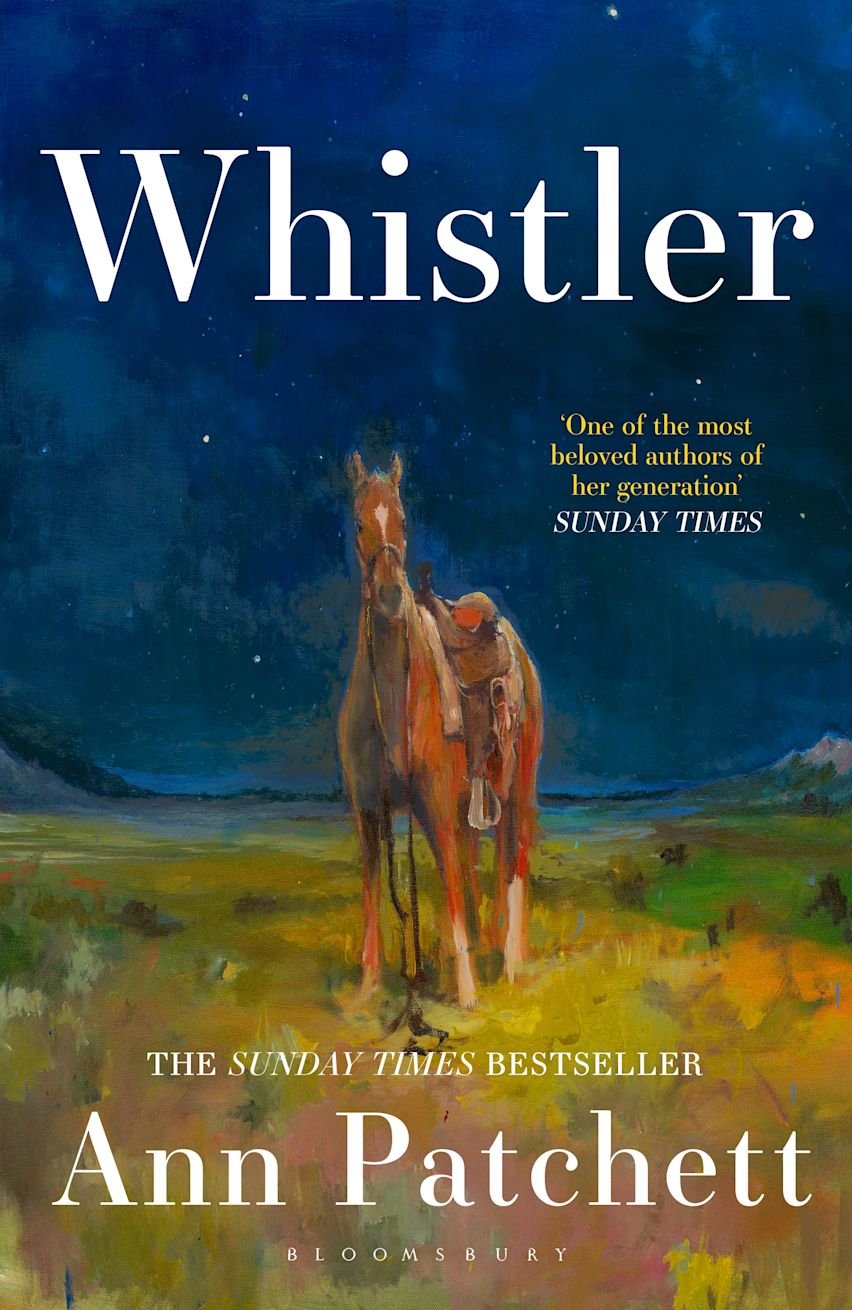
Whistler by Ann Patchett is another confirmation of the author’s elegant writing style, her adroitness at weaving narrative threads into a compelling tapestry, and acuity in probing the complexity of human character and emotion. Her stunning use of metaphors and incisive imagery lasts long after the last chapter has ended. It is a gentle story.
A chance meeting at the Metropolitan Museum in New York reconnects Daphne Fuller with Eddie Triplett, the second of her mother’s three husband’s. School teacher Daphne, now in her fifties, has not seen Eddie since she was nine years old, when, in a car he was driving, went over an embankment, threatening both of their lives. As a result of the accident, Daphne’s mother, Abigail, had divorced Eddie. Daphne and Eddie had had a loving relationship, and the reconnection plunges Daphne into the circumstances of the crash. As Whistler evolves, she brings her younger sister, Leda, into contact with him and eventually mother Abigail.
Daphne always assumed that she was responsible for the accident and indeed for the divorce. Like the peeling of an onion, the narrative explores Daphne’s guilt, her relationship with her biological father, a Gloucester fisherman, and even her mother’s newest husband (Daphne’s second stepfather.) Gradually, we learn the dark secret about Eddie – or rather Eddie and Skip, his college roommate – that was the real reason for her mother’s rejection of him.
Why “Whistler?” It all goes back to the snowy night of the accident, as Eddie and Daphne, who had been headed for a blackberry farm to look at the stars, wait to be rescued in her mother’s car, both injured. He tells her a story about a strong and loyal horse named “Whistler,” and how Whistler stayed with his injured owner, Mary, who was lying on the ground on a cold dark night, certain she would die. The horse is a metaphor for caring and courage, and Eddie’s spinning out of the story helped 9-year-old Daphne face what had to be done the night of the accident. The flashback to the accident occurs intermittently throughout the book, as if to undergird the courage it takes the characters to face truths about their past and present. Patchett brings in other reminders: a painting of a horse at the Met and, later, the discovery of a small metal horse from Daphne’s husband’s childhood, all reinforcing the underlying themes of love and caring and loss in these people’s lives. By the second horse reference, I must admit to thinking, Okay, I get it.
This is not a book about great tragedy, nor even piercing conflict. It is self-contained, generally optimistic and well executed. At a time of societal rage and ugliness, a rather lovely book is a welcome read.
I welcome your feedback in the comments section. Click upper left to return to the home page then hit “Leave a Comment.” Book recommendations welcome. To be alerted when a new blog is posted, look for “Follow’ in the upper right portion of the home page, enter your email and click on subscribe. If you enjoy reading my blog, please share it with friends.


I am already halfway through this book. It is indeed quite captivating. Patchett certainly knows how to weave themes together!
Sent from the all new AOL app for iOS
LikeLike