
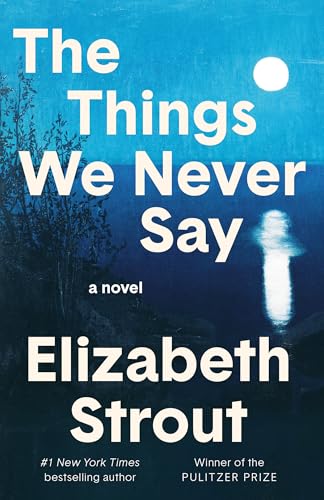
The Things We Never Say by Elizabeth Strout is the ninth book I have read by Strout. She raises many classic Strout themes: the lives of seemingly ordinary people, how people deal with each other and with their own feelings, the unmet need for intimacy. Many of her stories – think Olive Kitteridge – have been set in the fictional small town of Crosby, Maine. Her most recent book, Tell Me Everything, was also set there, and, as I wrote two years ago, it was a journey back to Crosby I didn’t need to make.
In her newest book, published May 6th, Strout has moved on. The Things We Never Say is set in a small town on the North Shore of Massachusetts. More important than geography, however, is the complexity of her characters and the depth of her emotional portrayals. This may be her best book ever. Her principal character, Artie Dam, a 57-year-old high school teacher, is complicated and nuanced, and Strout’s weaving of his life with those of his family, his students, his community, – his past and his future – is artful, seamless and brilliant.
Artie is a gifted educator, teaching his students academic subjects and also helping them mature in their personal relationships. He fights for students who are bullied and encourages those unsure of their own capacities. Yet he can’t get through to those he cares most about, including his adult son who has suffered emotional trauma. Sensing his wife becoming more remote, Artie resents her apparent ignorance of his deep sensitivities and lack of empathy. Loneliness, Strout writes, is not about being alone but about not being able to communicate one’s inner truths and secrets.
And secrets there are. One, for Artie, is that he has been contemplating suicide – until a boating accident that revealed to him that he did not really want to die. (Since readers learn this at the very beginning, I do not consider this a spoiler.)
Halfway through the book, Artie discovers a shocking secret that affects him, his wife, his son and another couple who had been friends. How this plays out drives the narrative.
Artie who has come to accept what fate has in store for him. (As Mainers might say in many of Strout’s books, “Okay then.”) But the theme of suicide returns. He contemplates today’s political landscape and says the country is committing suicide. I confess I found Artie’s recounting of Trump’s flaws and misdeeds jarring, even a distraction. But Strout’s characters are pitch perfect. Her imagery is evocative, and her craftsmanship is elegant. There’s an energy I didn’t find in her last book, and it’s hard to imagine that her next one can surpass this one.
I welcome your feedback in the comments section. Click upper left to return to the home page then hit “Leave a Comment.” Book recommendations welcome. To be alerted when a new blog is posted, look for “Follow’ in the upper right portion of the home page, enter your email and click on subscribe. If you enjoy reading my blog, please share it with friends.


I certainly liked the Olive series, so I’m heading for this recommendation right away—as soon as I finish The Keeper by Tanya French. (French’s The Secret Place was so pointless and boring that I actually QUIT halfway through, which my OCD hardly ever lets me do!)
LikeLike