
King of Kings: The Iranian Revolution: A Story of Hubris, Delusion and Catastrophic Miscalculation by Scott Anderson is a spellbinding journalistic revelation of the innermost thinking and maneuvering of key players in Iran and the United States leading up to the 1979 American Embassy seizure of hostages that would change the course of world events. Anderson deftly gives us the back story to the event that shaped global affairs for the last half century. The key players are not just those in the headlines but also lesser-known individuals who were impactful behind the scenes – for good and for evil.
King of Kings is a brilliant accounting of the decades-long history of the United States’ relationship with the Middle East’s most consequential country, from FDR’s snubbing of the Shah at the Tehran Conference in WWII, to our indifference to its rich cultural past, to our 1953 Cold War overthrow of its democratically elected government, replacing its president Mohammad Mossadegh with our government’s pawn, Shah Reza Pahlevi. We learn more about how the Shah spent much of his time on our doorstep, begging for armaments, again feeling humiliated when the United States capped what they were willing to sell, valuing Iran primarily as a presumed buffer against Russian communism. Until oil.
Oil has been central to the U.S. Iran relationship for more than 50 years, with periodic oil crises deepening American involvement there and cementing Iran’s role as a preeminent regional power. In 1972, with Nixon and Kissinger removing any limits to the arms Iran could buy, the shahanshah, (king of kings) intensified his building the largest army in the Middle East. This military muscle was in addition to the threat of Savak, the national security agency that the CIA helped to grow in the late fifties.
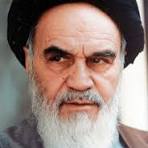
The underclasses struggled economically and lived in constant fear of political imprisonment or death at the hands of the all-seeing Savak. It seems inevitable that they would turn increasingly to the religious leaders, mullahs who included Ruhollah Khomeini, whom the Shah had arrested back in 1963. As the aging cleric’s popularity grew, the Shah exiled him. He remained abroad from 1964-1979, largely in France. From there, Khomeini sent home tape cassettes of his rants against the Shah’s regime and the American “satans” who had installed the Shah on the throne and kept him there.
With market manipulation and oil revenues exploding in the 1970s, Iran’s military and upper classes became progressively more corrupt. The shah was indecisive about reform, and his inner circle – fearing falling out of favor – told him only what he wanted to hear. (Sound familiar?) He thought he was beloved by his people, but his grip on power was becoming more precarious.
In 1977, Kissinger and successor-President Gerald Ford were replaced by a well-meaning Jimmy Carter, honest but naïve. He got elected by promising the American people he would never lie to them; his inner circle lied to him about Iran. CIA chief Stansfield Turner, Secretary of State Cyrus Vance, and national security advisor Zbigniew Brzezinski were all certain that moderates among the revolutionaries would prevail. None of them had ever heard Khomeini’s calls for action because secretly-acquired cassettes of his fiery speeches were never translated by either the CIA or State Department.
So the American government was unprepared for the growing turmoil in Iran, ignorant of the truth on the ground. 50,000 Americans lived in Iran, but the CIA, military and foreign service operatives knew nothing of the 2500-year history, culture, and dramatically different mindset for negotiation of the country in which they were stationed. They never bothered to learn the language or connect with people in the streets. They lived in a bubble, convincing themselves and those to whom they reported in Washington that their pawn, Shah Pahlevi, was on solid ground.
If there is a single hero in Anderson’s vibrant account, it would be Michael Metrinko, who, in his youth, had gone to Iran in the Peace Corps and later ended up working for the State Department. He walked the streets, knew the people, and spoke Farsi. His oft-repeated warnings about the growing instability of the Shah’s regime earned him rebukes and demotion. He eventually would be one of the 52 hostages held for 444 days. Ironically, he was often kept in isolation because the revolutionaries inferred from his speaking Farsi that he was CIA!
Anderson goes into great detail about the hours and days leading up to the toppling of the Shah, the institutionalizing of the arch-conservative theocratic state, the hostage negotiations, and the impact on the 1980 American election. Did these events influence the worldwide rise of militant religious fundamentalism – of all shades? While no definitive answer can be given today, there are enough examples that give credence to this.
As Donald Trump tries to negotiate us out of a losing hand of his own making in Iran, King of Kings enriches today’s readers with an appreciation of Iran’s multiple historic complexities. Trump, if he read books, would recognize himself as one in a line of powerful people whose hubris allowed them to be played by the Iranians. On this, Iran’s day of national mourning for the Ayatollah, Anderson’s book is a valuable reminder of the futility of the path chosen by our willfully obtuse and imperious President.
I welcome your feedback in the comments section. Click upper left to return to the home page then hit “Leave a Comment.” Book recommendations welcome. To be alerted when a new blog is posted, look for “Follow’ in the upper right portion of the home page, enter your email and click on subscribe. If you enjoy reading my blog, please share it with friends.


Thanks, Margie! This will be great reading for the history buffs in our family. I love reading your synopsis.
I hope we have a resounding victory at the polls in November!
Best,
Connie
Sent from my iPad
LikeLike
And so now here we are!😟
Sent from the all new AOL app for iOS
LikeLike