
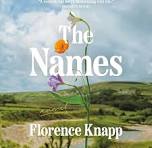
The Names by Florence Knapp offers a rich exploration of identity beginning with our names – how much of our name defines how we see ourselves, how our name influences others’ perceptions of who we are – and expanding her characters’ lifelong searches for their authentic selves.
The structure of this interesting debut novel is not unlike the timeline organization of The Sisters, which I reviewed December 18th. Knapp follows three characters in individual chapters identified by their names, within the framework of specific slices of time over 35 years, all woven together by a shared family narrative. In the case of The Names, the characters – Bear, Julian and Gordon – are all the same person, their personal odysseys taking different paths based on the significance of their names. Here are life stories of what-ifs.
Cora, mother of Bear/Julian/Gordon, is Irish, married to Gordon, a highly respected British physician and pillar of their London community. Accompanied by their 9-year-old daughter, Maia, Cora goes to the London registry to record the birth of her second child, under strict instructions from her husband to name the baby Gordon, carrying on a multi-generational family tradition. Husband Gordon, however, is a domestic abuser, and Cora imagines the burden the baby would bear going through the life named to carry through life “ties to generations of domineering men.”
She considers registering the child as Julian, meaning youthful or sun father. A name meaning sky father signals the child would rise above his father. Daughter Maia wants to name the baby Bear, as someone who is strong but soft and cuddly, the antithesis of the father. Cora records the name Bear and is exuberant about doing so, but at home husband Gordon goes into a rage.
Each of the time-specific tranches of the book follows the life of Cora’s son as it would have played out if he had borne each of the three names. It starts in 1987 and picks up the stories of the three in 1994, rolling out succeeding tranches every seven years.
This intricate structure, while reminiscent of The Sisters, proceeds in a silken way, making it effortless for the reader to be absorbed in the three versions of one person’s life. All three of the paths are, whether consciously or subconsciously, shaped by the impact of having lived with a father’s rage, his pathological need to control the mother, a shocking murder, and the children’s lifelong efforts to reconcile their past, find themselves, build normal lives and find fulfillment.
Once an aspiring ballerina, abuse victim Cora herself labors repeatedly to express her own identity, but escaping her oppression is overridden by her concern is to protect Maia’s and Bear’s/Julian’s/Gordon’s emotional well-being from her husband’s toxic and abusive personality.
There is a purity to the story telling, and a reader can savor the author’s skill, the clarity and beauty of the writing. While it is a tense novel about searing family angst and dysfunction, it is also a book about resilience, finding one’s own individuality, and freeing oneself from past trauma to build a meaningful life. In the end, it is a hopeful book, intelligently conceived and well executed.
I welcome your feedback in the comments section. Click upper left to return to the home page then hit “Leave a Comment.” Book recommendations welcome. To be alerted when a new blog is posted, look for “Follow’ in the upper right portion of the home page, enter your email and click on subscribe. If you enjoy reading my blog, please share it with friends.

