
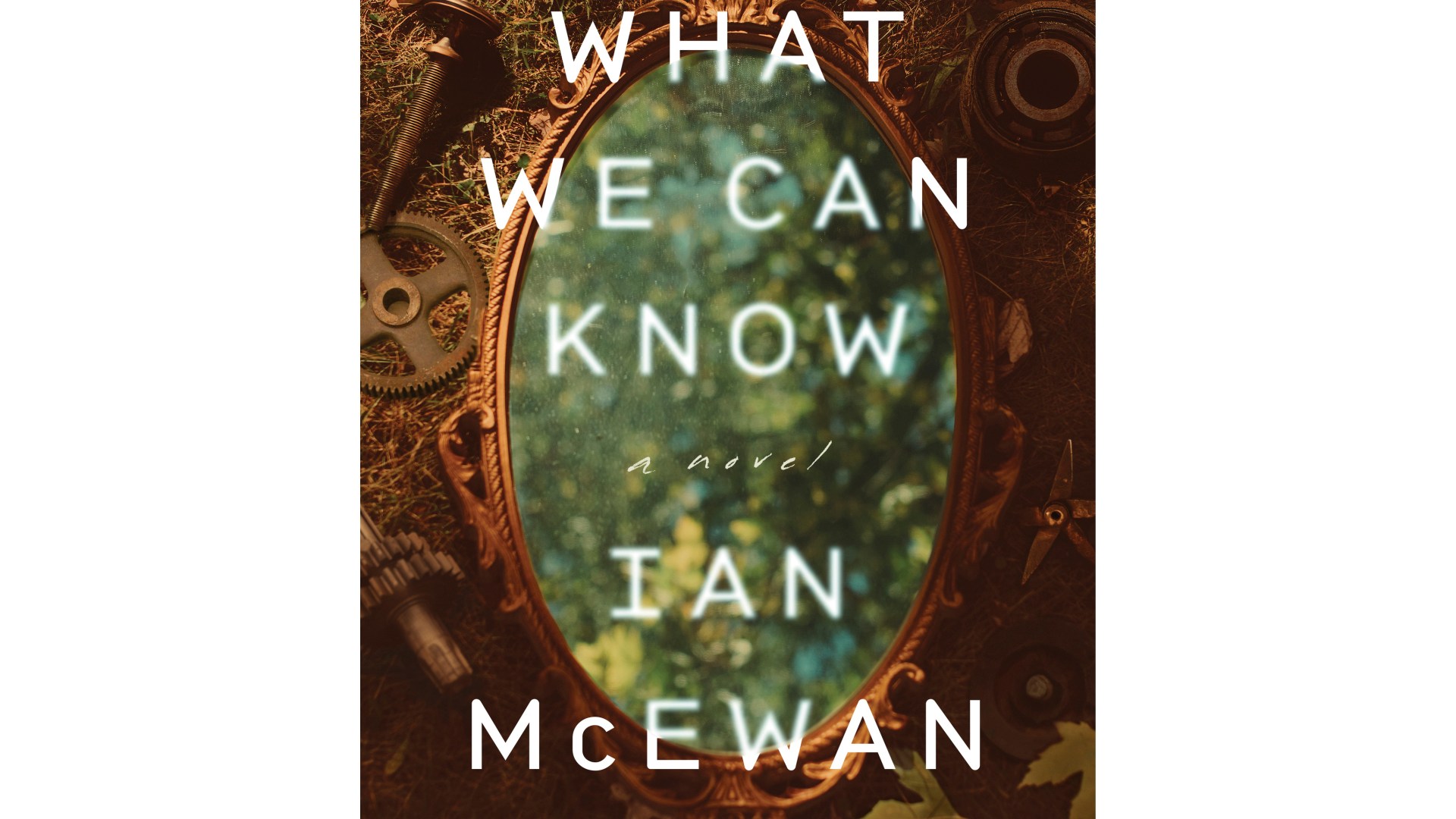
What We Can Know by Ian McEwan opens in the year 2119, which technically qualifies it as science fiction. But the characters and the issues that preoccupy them have a very contemporary feel. It is the most recent in a string of books I’ve read with pleasure by Ian McEwan, including Atonement, Amsterdam, On Chesil Beach, Innocent and Saturday.
Part One of the novel is told by character Thomas Metcalfe, a poetry professor and scholar whose research focuses on the years 1990 – 2030. Writing in around 2119, he (along with colleague Rose) is obsessed with finding esteemed British poet Francis Blundy’s long-lost epic poem. There was just one copy; it was never published but mythologized over a century in the cloistered halls of academia.
The book starts very slowly, focusing on a dinner party way back in 2014 to celebrate the 54th birthday of Blundy’s wife Vivien. Francis has written a corona, a highly complex form of poetry, which Francis reads to his captive audience as his birthday gift to Vivien. The dinner table conversation leading up to the momentous reading is pudding-thick with literary allusions.
I confess that the complexities of the corona structure are a challenge even to this former English major. In addition to the internal rhyming requirements of each sonnet, the last line of each one is the beginning line of the next, the series of 15 sonnets forming a complete circle. I came to see the circular structure of the poem as a metaphor for the circle of individuals and what McEwan will come to reveal about their interwoven relationships, their outward tensions and innermost dark secrets.
Metcalfe in 2119 tells what he knows of the private lives of the dinner party attendees, whose political disputes and personal jockeying show them to be very much like people we know in our own time. While drawing us into their lives, McEwan reveals convulsive external events since that 2014 dinner party: the seas have risen, making archipelagos out of nations like Great Britain; radiation from the accidental detonation of a nuclear warhead has generated uncontrollable viruses; some plant and animal species have disappeared; studies of the humanities (already under attack in our own/the Blundy’s time) weakened still further; optimism about the future has morphed into pervasive gloom. A conversation about the human role in climate change reveals there are still deniers, despite what history has experienced as The Inundation.
McEwan’s facile time travel also loops us briefly back to 1817 by labeling the 2014 Blundy birthday party the Second Immortal Dinner, McEwan’s fictional creation echoing the so-called “First Immortal Dinner” that really did take place in 1817 and involved greats like Keats and Wordsworth. One imagines the hyper-intellectual repartee among elite academic types may not have differed very much from one century to the next or the next.
For writers, arguably like narrator Thomas Metcalfe, accurate knowledge of past lives proves elusive. When Blundy died, details were scant. Despite the many aspects of his complex personality, his obituary stated simply that he had been a great poet. “The subject hardened into a public posture, like a pigeon-stained statue of a forgotten general,” Metcalfe observes. This book is full of well-turned phrases like this, creating frequent moments of pleasure in McEwan’s writing, despite the reader’s motion sickness traveling back and forth across centuries.
Part Two of the book eventually answers the mystery of what happened to the famous birthday poem. This portion of the novel is largely in Vivien’s voice, based on journals she kept in the 21st century, emails and other correspondence that Metcalfe discovers. Vivien reveals some shocking truths about her relationship with Francis and other characters’ hidden secrets. There are betrayals and loyalties, passionate affairs and recriminations, personal and professional successes and setbacks, wrongful deaths and a kidnapping. The narrative becomes more buoyant, and the reader can better appreciate McEwan’s power in storytelling, the richness of his language, and the cleverness of how he weaves together the many threads of What We Can Know.
He gets us thinking about how writers and historians relate to people whom they write about. In an increasingly gripping narrative, he captures the zeitgeist of our own generation and paints a chilling picture of what life could be a century from now. Most of all, McEwan reminds us that, then and now, facts are not necessarily truth, or all of it anyway.
I welcome your feedback in the comments section. Click upper left to return to the home page then hit “Leave a Comment.” Book recommendations welcome. To be alerted when a new blog is posted, look for “Follow’ in the upper right portion of the home page, enter your email and click on subscribe. If you enjoy reading my blog, please share it with friends.
 Marjorie Arons-Barron
Pingback: A lifelong journey with college mates by Marjorie Arons-Barron - Richard Howe
We read this book
LikeLike