
A week into Operation Epic Fury, the administration’s stated objectives have shifted by the hour and by the speaker: eliminate the nuclear program, roll back ballistic missiles, defang the proxies, respond to Israeli pressure, achieve regime change. The timeline is “four weeks or more,” with hints of ground troops “if necessary.” What constitutes a win has never been defined. But on one point, Trump has finally been specific. He told CNN this week that Iran would work out “like Venezuela.” He means it as a promise. It reads more like a warning.
The Venezuela he is describing is not the Venezuela of democratic transition. The “wonderful leader doing a fantastic job” he has praised by name is Delcy Rodríguez — Nicolás Maduro’s former vice president, a loyalist of the Chavez revolution who was sanctioned by both the United States and the European Union before U.S. military intervention made her Venezuela’s interim president. She told NBC News as recently as last month that Maduro remains the legitimate president of the country she now runs. She cooperates because Trump made the alternative explicit: “If she doesn’t do what’s right, she is going to pay a very big price, probably bigger than Maduro.” This is mob language. The democratic opposition — the figures who actually fought Maduro, who won the moral as well as arguably the electoral argument — were shunted aside. They lacked, Trump said, the “support to govern.”
This is the model. Remove the hostile leader. Install a compliant insider from within the existing system. Extract concessions. Normalize. Declare victory. Trump shockingly confirmed his religious flexibility when asked about Iran’s next government: “I don’t mind religious leaders. I deal with a lot of religious leaders and they are fantastic.” A secular democracy, it turns out, is optional.
The problem is that Iran is not Venezuela, and the conditions that make managed substitution even minimally workable there do not exist here. Venezuela had a single authoritarian whose removal created a political opening, however imperfect. Iran has a layered institutional architecture – a deep state, if you will – that was specifically designed to survive the loss of any individual. The Islamic Revolutionary Guard Corps controls an estimated 30 to 40 percent of the Iranian economy. The militia networks, the conventional armed forces, the clerical establishment — these are not a support structure for one man. There are, as yet, no signs of fracture among Iran’s security forces. Leaders at the top are replaced as easily as the head of a hydra.
Meanwhile, the opposition that would need to fill any vacuum is, in the blunt assessment of Foreign Affairs, “an archipelago of political islands divided by geography, generation, ideology, and exposure to repression.” The organized political opposition was largely dismantled after the 2009 Green Movement crackdown. What remains is decentralized, leaderless, and profoundly fragmented. Protest waves in 2019, 2022, and again in 2025-2026 — the last suppressed with catastrophic violence, with credible estimates of those killed reaching into the tens of thousands — have been spontaneous and broad but strategically incoherent.
Ethnic minority movements (such as the Kurds) have genuine organizational capacity but want decentralization and autonomy that no successor central government, American-backed or otherwise, is likely to grant. The exiled figures, including Reza Pahlavi, the former Shah’s son, have diaspora visibility and limited demonstrated domestic traction. There is no cohesive democratic alternative waiting in the wings. There was none in Iraq in 2003 either.
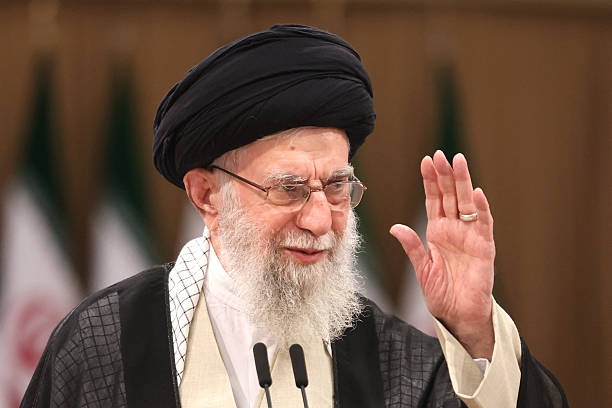
Last week, he told the Iranian people with a flourish, “the hour of freedom is at hand. When we are finished, take over your government. It will be yours to take.” Trump now says he wants to be involved in choosing Khamenei’s successor.
The United States has repeatedly demonstrated that it knows how to destroy regimes. Successful transitions are a different matter. Iraq was supposed to be regime change without nation-building — a welcome reception, rapid power transfer to exiles, early elections, troops home by summer. What followed was insurgency, sectarian fragmentation, and the expansion of Iranian influence across the Arab world. Iran is physically larger than Iraq and Afghanistan combined, with a population of 92 million, second only to Egypt in the region. The scale of what “next” means has not been addressed because it may not have been seriously considered.
There is a version of this that Trump can call a win without resolving any of it. Find an acceptable cleric or general from within the existing system who will make the right noises about peace with Israel and cooperation with Washington. Recognize him. Ease the strikes. Claim the nuclear threat is gone and the proxies are defanged. Let oil prices fall. Tell the base there will be no forever war. Meet Xi at the end of the month with something he can call victory.
Whether that settlement holds — whether a leadership installed under American military duress retains the domestic legitimacy to govern a traumatized and furious population, whether the IRGC accepts a new arrangement that threatens its economic empire, whether the regional proxy networks simply reconstitute under new management — these are questions the Venezuela approach does not answer. They are questions that will be answered eventually, at a cost that will not be borne primarily by Americans.
Ayatollah Khamanei’s Iran was the world’s greatest state sponsor of terrorism. No tears should be shed for his demise. The Iranians who spent January in the streets, who were killed in numbers that may never be fully counted, were not fighting for a friendlier theocrat who will negotiate oil contracts with Washington. They know what the Islamic Republic is. They have been living under it. What the Venezuela template offers them is the same bargain the United States has offered oppressed populations before: your aspirations are a logistical inconvenience. We have a deal to close.
Trump, eager for quick results, risks the quagmire he has railed against his entire political life. The questions he hasn’t answered beget questions he hasn’t even cared to ask.This is not a time for magical thinking.
I welcome your feedback in the comments section. Click upper left to return to the home page then hit “Leave a Comment.” Book recommendations welcome. To be alerted when a new blog is posted, look for “Follow’ in the upper right portion of the home page, enter your email and click on subscribe. If you enjoy reading my blog, please share it with friends.
 Marjorie Arons-Barron
This is horrifying, depressing and spot on. Magical thinking… at least children can be reasoned with. Delusional, maniacal, aggression without reflection. I agree with Mickey, this is superb. Send it as an op-ed.
LikeLike
There is one more scenario that is quite likely – Just Leave. Colin Powel at least had the integrity of – you break it you buy it. Trump on other hand never has shown the ounce of such responsibility.
You also have to consider Israel’s culpability in this – and this sin should not go unpunished. What should be the response of a future democrat president (hopefully) – cut aid, stop selling any ammo or plain BDS? This is worthy of consideration and thought as well.
LikeLike
this is absolutely superb, margie!
LikeLike