
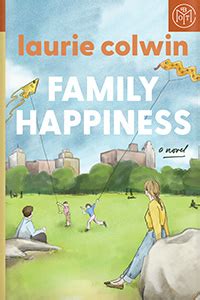
Family Happiness by Laurie Colwin was published in 1982 and was recently discovered by a friend, who recommended it to me. It is a well-drawn portrait of the Solo-Miller family, an affluent New York family steeped in tradition and guided by a willful mother, Wendy, who demanded decorum and imposed rules for every aspect of family life. She sees “the family” as the foundation for society. As Colwin portrays it, marriage is a dynastic institution, a set of obligations passed on from generation to generation. In this novel, the formality for younger generations is suffocating but generally adhered to.
The protagonist, a mother herself, is Polly, the vessel of her mother’s dicta, among them that “a good wife’s job was to create a haven in a heartless world” for others. Like her father (Henry Solo-Miller), her husband, Henry Demarest, is a wealthy, highly successful, driven lawyer, whose priority in life is his work. When he is not in his office or traveling on business, he is in his study at home reviewing cases. Polly sees her role in life as attending to his needs and the needs of other members of the family, always making things nice for everyone else and denying – often not even recognizing – her own emotional needs, including built-up rage at the decades-long repression.
Ultimately, Polly finds herself in a love affair with an artist. Wracked by guilt at her personal failure, she nevertheless comes to understand herself better and manages to open up new lines of communication with her husband. She loves two men, and, for the first time in her life, she becomes free to experience passionate love and deep pain.
This novel still contains lessons regarding the complexity of marriages today, but I would call it a good novel, not a great novel.
The author does write elegant prose. She has a talent for capturing telling details about people and their distinguishing features. Some of her character portraits are both authentically unappealing and laced with gentle humor. Speaking of a new member of the family from Eastern Europe, she writes, “Her English was stiff but close to perfect. It was rather like listening to someone who had learned the language by reading The Origin of Species.” Or, of another character playing the piano at a family gathering, Colwin observes, “the expression on his face was that of an ingenious veterinarian who had quelled a room full of anxious schnauzers.”
As they eventually come to communicate somewhat more, Polly and husband Henry do demonstrate growth, but the overall narrative seems more like a family photo album than a great story well spun out. The author’s empathy for her characters is evident. Family Happiness may resonate most with women who came of age in the fifties, who played by the rules modeled by their parents but discovered truths about themselves as the Women’s Movement evolved. I just didn’t feel the need to revisit the scene.
If you read it and loved it, please push back.
I welcome your feedback in the comments section. Click upper left to return to the home page then hit “Leave a Comment.” Book recommendations welcome. To be alerted when a new blog is posted, look for “Follow’ in the upper right portion of the home page, enter your email and click on subscribe. If you enjoy reading my blog, please share it with friends.
 Marjorie Arons-Barron